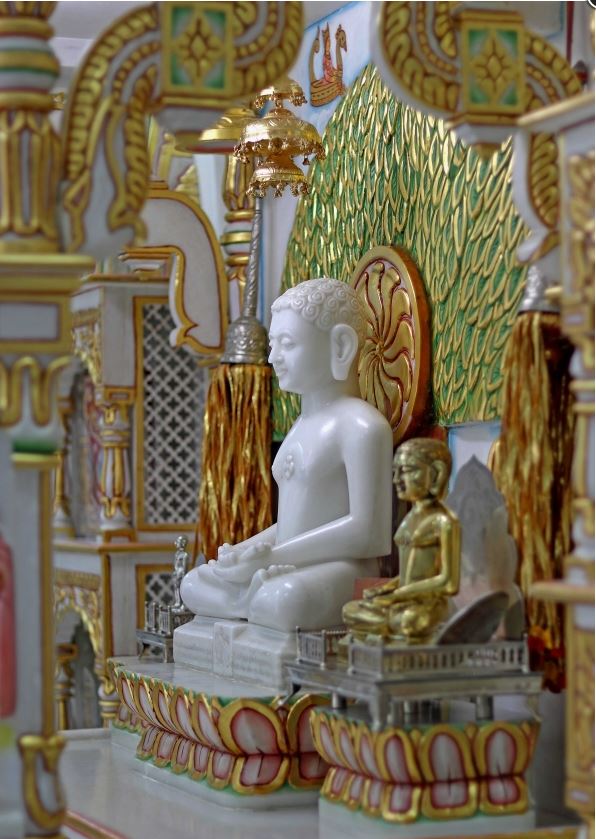
Sanctum · Pushpadanta Bhagwan

A Sacred Threshold

Enter the access code to begin your journey into the timeless wisdom of the Ninth Jain Tirthankara.

For Devotees · Scholars · Seekers

Two Sacred States

Arihant & Siddha — The Twin Crowns of Liberation

Within Jain philosophy, two profound states mark the soul’s ultimate victory. Each represents a transformation so complete that the seeker becomes a beacon for all who follow.

Arihant · अर्हन्

The Conqueror Within

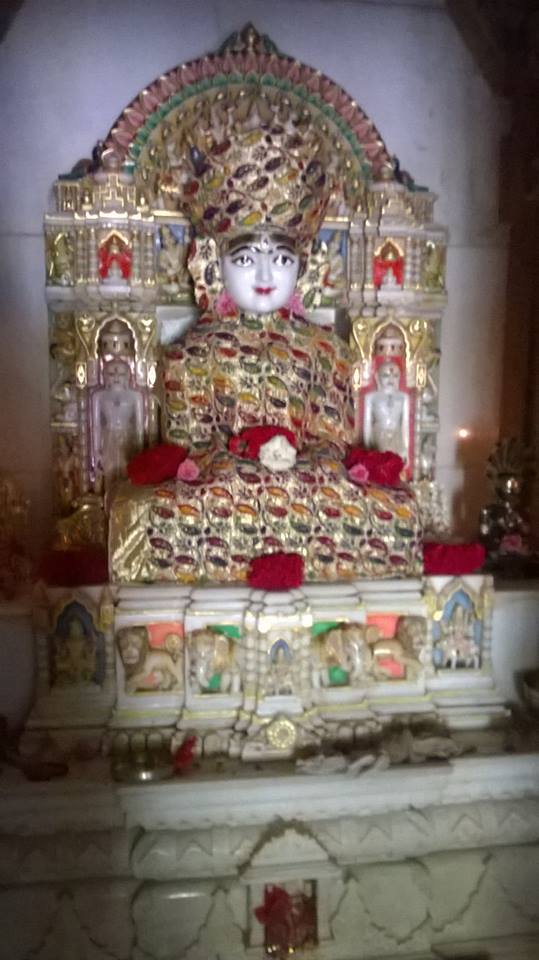
An Arihant is one who has destroyed the four destructive (ghati) karmas — those that veil knowledge, perception, energy, and the soul’s blissful nature. In this state, the soul attains Kevala Jnana, the omniscient wisdom that beholds every facet of reality.

Bhagwan Pushpadanta, having reached Arihantship beneath the sacred Malli tree, became a living teacher whose every word, glance and silence radiated infinite knowing. The Arihant remains in physical form to teach, to guide, to bless.
Siddha · सिद्ध

The Liberated Soul

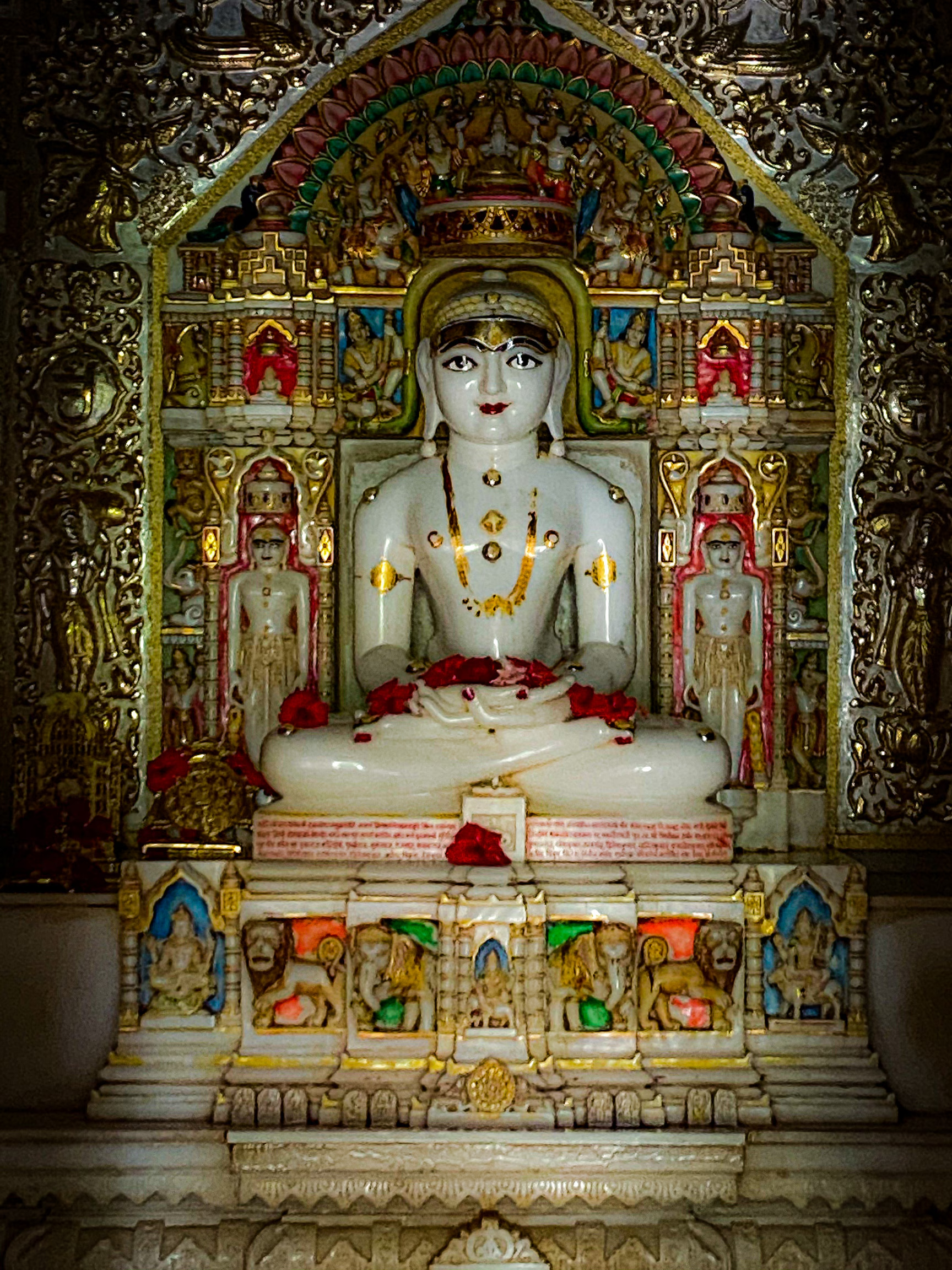
A Siddha is the perfected being — one who has shed all eight forms of karma, including those that condition the body and life-span. Free from form, free from name, the Siddha rests eternally at the summit of the cosmos in a state of infinite knowledge, perception, energy and bliss.

At Mount Sammeta, Bhagwan attained Siddhahood — the eternal liberation. In this state he abides forever, beyond birth and death, beyond every limit, a perfected soul whose example illumines the path for every seeker, in every age.

Among the Twenty-Four

Ninth in an Eternal Lineage

The twenty-four Tirthankaras of the present descending half-cycle are the great ford-makers, each appearing in their appointed era to renew the eternal Dharma.

I
Adinatha
II
Ajitanatha
III
Sambhavanatha
IV
Abhinandana
V
Sumatinatha
VI
Padmaprabha
VII
Suparshvanath
VIII
Chandraprabha
IX
Pushpadanta
SUVIDHINATHA
X
Shitalanatha
XI
Shreyansanath
XII
Vasupujya
XIII
Vimalanatha
XIV
Anantanatha
XV
Dharmanatha
XVI
Shantinatha
XVII
Kunthunatha
XVIII
Aranatha
XIX
Mallinatha
XX
Munisuvrata
XXI
Naminatha
XXII
Neminatha
XXIII
Parshvanatha
XXIV
Mahavira
Sacred iconography of Suvidhinatha

Sacred Iconography

Symbols of the Ninth Tirthankara

Each Tirthankara is recognised through a distinct set of sacred attributes — emblems that devotees contemplate as gateways into the deeper essence of his being.

M

Lanchana — Makara

The crocodile, signifying mastery over the deep waters of samsara — the soul’s capacity to traverse worldly existence undisturbed.

V

Yaksha — Ajita

The protective male attendant deity, embodying righteousness and the unwavering shelter of dharma.

Y

Yakshini — Sutaraka

The female attendant deity, symbolising spiritual nurturing and the gentle radiance of divine grace.

T

Sacred Tree — Malli

The tree beneath which Bhagwan attained Kevala Jnana — a living altar where omniscience first illumined his consciousness.

Temples · Scriptures · Devotion

A Living Heritage of Faith

Suvidhinath Jain Shwetambar Temple — Bangalore

I · Sacred Sites

Temples of Devotion

From the ancient pilgrimage of Kakandi to the consecrated temples of Bangalore and across India, devotees have erected sanctified spaces where the presence of Bhagwan Pushpadanta is honoured through ritual, song and silent meditation.

Sacred manuscripts and scriptures of Jainism

II · Scriptures

Sacred Texts

The teachings of Bhagwan are preserved within the great Jain canon — the Agamas, the Trishashti-Shalaka-Purusha-Charitra and the Mahapurana — alongside countless devotional hymns and philosophical treatises composed across the centuries.

Devotional practice and worship

III · Devotion

Devotional Practices

Daily darshan, the offering of fragrant flowers and lamp, the recitation of sacred mantras and the observance of fasts on auspicious days — devotees keep the eternal presence of Bhagwan Pushpadanta alive in the rhythms of every sincere life.

Walk among the sacred images, manuscripts and temple art that carry the eternal presence of Bhagwan Pushpadanta.

Enter the Gallery